Project 1 – “Bugs and Booze: effects of urbanization and vegetation on flying invertebrate communities of temperate forests.“
As human populations grow, urban land cover continues to expand, drastically transforming natural ecosystems. Urbanization leads to habitat fragmentation, pollution, invasive species, and rising temperatures—factors that heavily impact biodiversity, particularly vegetation and invertebrate populations.
To help counteract these effects, conservation areas and urban green spaces are developed to support both wildlife and human recreation. However, these urban spaces often support less biodiversity than rural conservation areas. Insect communities in highly urbanized areas, such as city centers, tend to show the lowest taxonomic richness.
Interestingly, some invertebrate groups like bumblebees and lepidopterans show increased species richness in suburban areas—zones with intermediate human disturbance. This may be due to higher plant diversity and these areas serving as transitional zones between rural and urban environments.
High plant species diversity and vegetation structure—such as floral abundance, patch size, sunlight exposure, and woody plant cover—are key drivers of insect diversity. As urbanization continues to shape landscapes, it’s vital to understand how urban parks influence invertebrate communities and what environmental factors drive those changes.
This study will test three hypotheses:
Hypothesis I: Proximity to urban environments influences the composition of invertebrate communities.
Hypothesis II: Forest woody plant composition (density, abundance, species frequency, and coverage) affects invertebrate community composition.
Hypothesis III: Invertebrate community composition differs based on proximity to walking or hiking trails.
Project 2 – Is there no place like home? Investigating the effects of moisture gradients and invertebrate colonization on oak (Quercus) leaf litter decomposition using the homefield advantage hypothesis“
Leaf litter decomposition is a complex process driven by climate, leaf chemistry, and the decomposer community. These factors interact to influence how quickly decomposition occurs. Climate—especially temperature and moisture—shapes leaf chemical traits, which in turn influence plant survival and resistance to herbivory. As a result, plants in different habitats develop distinct chemical profiles. Leaf chemistry also influences which decomposers—such as invertebrates and microbes—can colonize and break down the litter.
The Home-Field Advantage (HFA) hypothesis proposes that litter decomposes faster in its native habitat than in foreign ones due to local adaptation of decomposer communities and climate compatibility. This is typically tested through reciprocal transplant experiments, comparing decomposition rates in “home” vs. “away” environments.
Oaks (Quercus spp.) provide a useful system for testing this hypothesis. Two common species in eastern North America—pin oak (Q. palustris) and northern red oak (Q. rubra)—occupy different habitats and have distinct leaf chemistry. Q. palustris thrives in wet, acidic soils in floodplains, while Q. rubra is found in well-drained upland soils. Structurally similar, their leaves differ in carbon-to-nitrogen ratios, toughness, and secondary compounds like tannins and proanthocyanidins.
In this study, I will investigate (1) decomposition of leaf litter from dominant oak species and the impact of soil invertebrate diversity/presence as well as habitat (moisture) on said decomposition, (2) relationships between habitat, arthropod diversity/presence, and leaf chemical composition, (3) the impact of the home-field advantage on leaf litter decomposition across a moisture gradient.
To address these questions, I propose to test the following hypotheses:
Hypotheses I: The abundance and diversity of arthropods, coupled with soil moisture, will affect litter decomposition rates.
Hypothesis II: The chemical composition of leaf litter will affect patterns of arthropod diversity and litter decomposition rates.
Hypothesis III: Litter decomposition rates will be enhanced for leaves in their home environment relative to other environments (Home-field advantage)
Project 3 – “Decay above the clouds: Elevational variation alters leaf litter decomposition and decomposer activity”
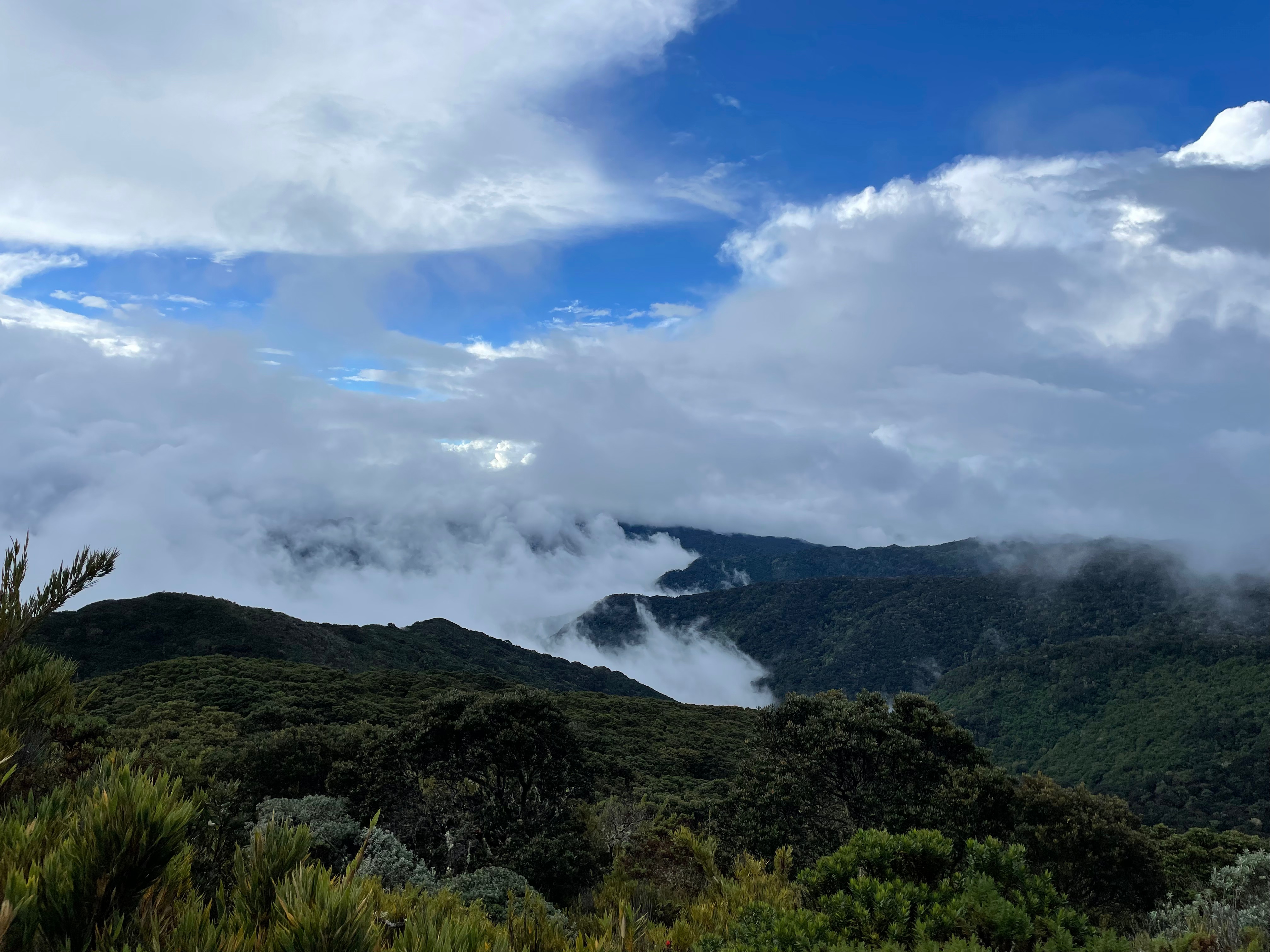
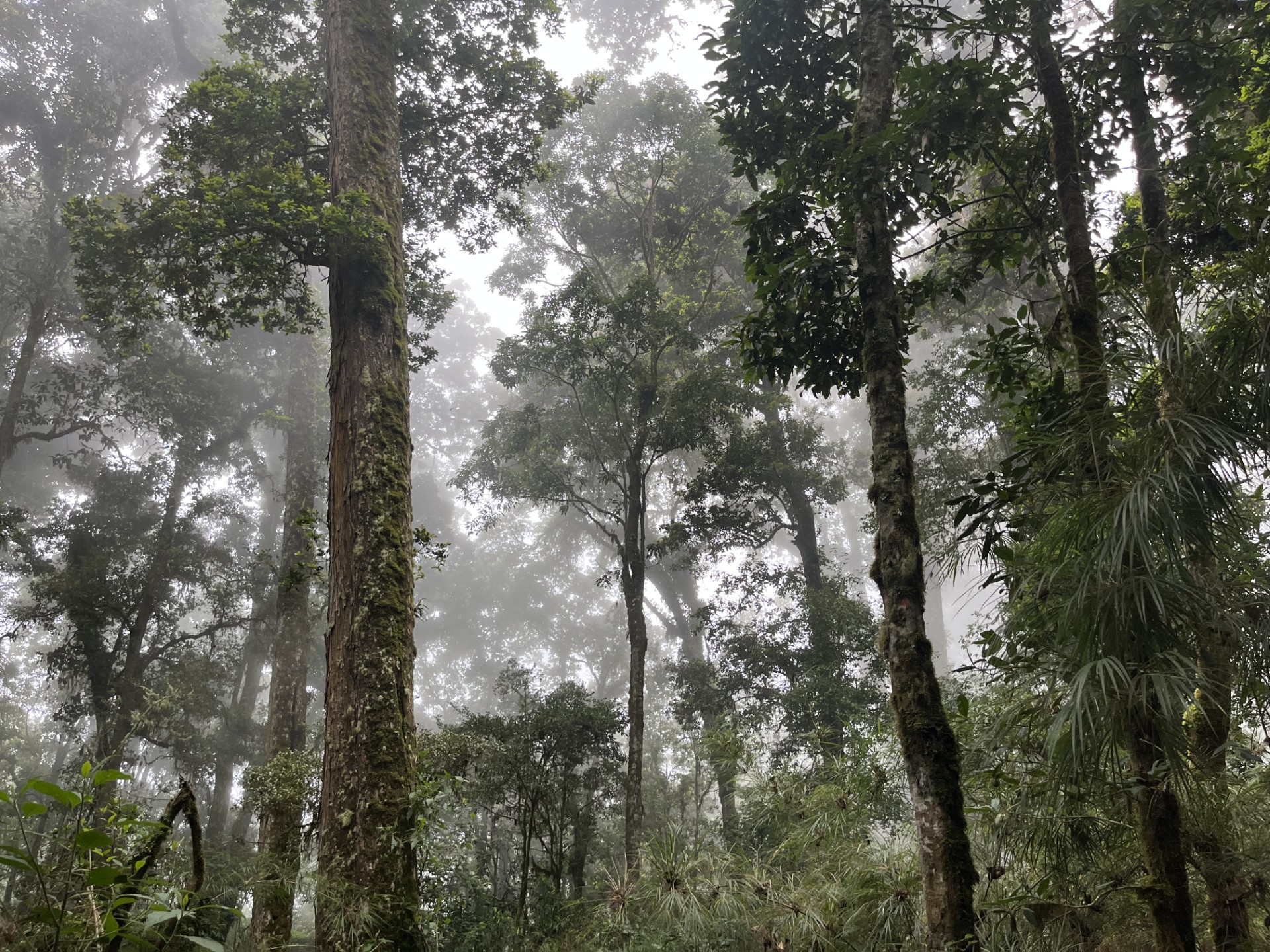
Tropical montane cloud forests are ideal for studying species diversity and dominance along steep elevational gradients. These forests show distinct patterns of species distribution due to abrupt environmental changes over short distances. Species endemic to these habitats must adapt to extreme conditions, including high moisture, cool temperatures, strong winds, low nutrient levels, limited sunlight, and intense UV radiation at higher elevations. These stressors often lead to communities with lower diversity, shifts in species dominance, and distinct physical and chemical traits—such as shorter trees, smaller and thicker leaves, and reduced productivity.
However, in the Talamanca Mountain range, Quercus species defy this trend. They grow tall (over 40 meters), produce large amounts of biomass and litter, and maintain high productivity at high elevations. This suggests unique adaptations, potentially involving phenolic compounds. These compounds are influenced by both environmental factors and plant genetics and often increase in response to stress. Phenolics help protect plants by acting as sunscreens against UV radiation and as antioxidants that reduce cellular damage.
In addition to their protective roles, some phenolics decompose even more slowly than lignin and may inhibit microbial and invertebrate activity due to anti-herbivory properties. This makes Quercus leaf litter in tropical montane forests a compelling system to explore the interactions between climate, chemical composition, and decomposer communities.
In this study, I will investigate (1) decomposition of leaf litter from dominant oak species and the impact of soil invertebrate diversity/presence as well as habitat (elevation) on said decomposition, (2) relationships between habitat, arthropod diversity/presence, and leaf chemical composition, (3) the impact of the home-field advantage on leaf litter decomposition across a elevational gradient.
My hypotheses are as follows:
Hypotheses I: The abundance and diversity of arthropods, coupled with elevation, will affect litter decomposition rates.
Hypothesis II: The chemical composition of leaf litter will affect patterns of arthropod diversity and litter decomposition rates.
Hypothesis III: Litter decomposition rates will be enhanced for leaves in their home environment relative to other environments (home-field advantage).





 Harlee Rush